

Sunday, 5 August 2012
transmaterial - soft shelf
Typical shelving systems retain the same configuration when fully utilized or when empty. Developed by Lateral Architecture, Soft Shelf adapts and changes with its contents and can be expanded or compressed to fit a variety of spaces. The basic shelf unit is composed of two strips of industrial gradefelt, segmented vertically and stitched at intervals to create pockets. Units connect to each other by Velcro, and shelf segments can be added as desired. Segments have aluminum eyelets at the top and are hung from a stainless-steel rod like a curtain. Soft Shelf can be hung against a wall or from the ceiling to act as a screen.

transmaterial - Luminate
Luminate combines translucent plastic and wood strips in a rigid panel format, allowing light to filter through a material used for applications that would usually require an opaque surface. The material is a modified acrylic adhered to selected exotic timbers with a proprietary fusion process. The manufacturer has also recently combined colored finishes with the translucent strips.

Transmaterial-Auto door
Cleanliness, efficiency, compactness, cool-factor – for a variety of reasons, automatic doors have become a standard feature of Japanese shops. While the typical sliding star-trek style design has proven itself, the Tanaka Auto Door aims to improve upon a good concept. This new design entails strips equipped with infrared sensors that open to the approximate shape of the person or object passing through, minimizing entry of dust, pollen, and bugs while keeping precious air-conditioning in. The technology for the new design seems to be in it’s infancy, but Japan has proven once again that it’s a least ten years ahead of everyone else.

Transmaterial - Jagorta
Jagorta is a wood veneer panel that transmits light. It consists of select veneers such as cherry, maple, or oak mounted to a translucent core with a specially developed adhesive.
As light passes through the thickness of the veneer, the natural surface structure of the wood is revealed. The panel transmits uniform light throughout the entire panel, without borders or joints. Suitable for a variety of interior applications, Jagorta is an effective mood lighting element that imparts a warmth reminiscent of a fireplace.

[2 plantrooms] Effects
For our plantrooms, we have decided that for our bridge-framing, a dystopian feeling will be presented and utopian for the drainage system as they reflect on each of their themes.
The draining system is very environmental as it provides a more ecological way of obtaining clear water, which also appeals to the idea of utopia from the short novel 'The ultimate city'. Garden city which is a mirror of utopia in the novel informs us that there are no cars, and everything is in the most basic form while obtaining the most from the environment that they are in. This is extremely ecological and efficient, and that is what we want co-existing in our project too. The materials used in this will probably include plaster for the base to show water flowing through the plantroom, acrylic to symbolise the glass where water will be running down from the top of the plantroom and MDF spray painted black for the walls so that the light and shadow will be more emphasised in this model.


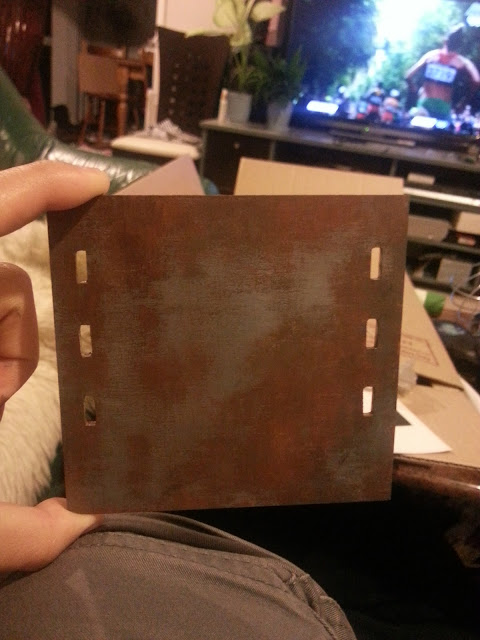
 For the bridge-type framing, it shows the limited materials that is avaliable, and this gives a kind of lost and forgotten feeling, how a lot of the materials are torn or destroyed from other buildings or monuments as described in 'The ultimate city' by G.J. Ballard. As for the platform we want to create a futuristic feeling where the amount of materials available is very limited and how transport will become very technological and mechanical, but also at the same time deserted. Just talking about the view from far away we want to create a floating sort of platform that gradually rises and a lush overgrown carpet to show the abandoned environment (no one to care and tend to these plants so they are grown all over the place). As for the material, we want to show that its is a kind of rusted metal-type feeling to it by using a special kind of metal or just painting over the MDF. We will have strings going around the frames to show tension as associated with the structure of bridges. The shadows created by the frames and strings differs between a softer shadow and a hard shadow as it varies from the height it is off the ground and would interesting to investigate.



The draining system is very environmental as it provides a more ecological way of obtaining clear water, which also appeals to the idea of utopia from the short novel 'The ultimate city'. Garden city which is a mirror of utopia in the novel informs us that there are no cars, and everything is in the most basic form while obtaining the most from the environment that they are in. This is extremely ecological and efficient, and that is what we want co-existing in our project too. The materials used in this will probably include plaster for the base to show water flowing through the plantroom, acrylic to symbolise the glass where water will be running down from the top of the plantroom and MDF spray painted black for the walls so that the light and shadow will be more emphasised in this model.


[2 plantrooms]Atmosphere models
These are the multifunctional models one showing a drainage system so that other than being able to use storm water as a resource to not only water the plants but being able to filter it and then having a kind of waterfall happening around it. The plants will be placed on the top where the lining is coming through and would almost be crawling out of the spaces made. The visitors/tourists/travellers will walk through the middle (where the empty space is) and somehow interact with the plantroom and enjoying not only looking at the plants from the outside but maybe from the roots as well.

This one shows minimal structure where we could work with the framing and tension with the strings. Here, the plant would somehow come under the three-piece platform and grow up which would seem like a bed of green mushes. There would also be vines and such dangling from the 'cranes' which would act as a support for the plants. The people will walk across the platforms to get across and have a look around plantroom, experiencing a real live jungle-type space.Different from the plant room above, this plant room will be working with the environment around, not just confining the person into this little space and expecting them to get something from it.


 |


This model was more about how i could created different shapes and light with random material. Here i used black foam board, string, tracing paper and needles. I experimented with the space created by this model and the structure, but as you can see this is a very confused model (the same as me when i first started on this exercise) but this was crucial as later it gave me more ideas about what i could work with and produce, which was the two models above.


[2 plantrooms]RUBBINGS OF OUR SITE [PAPER]
We had to go back down to our sites and record down the interesting textures that we thought we could use for our plantrooms as wallpaper. We had to use rubbings as a form of documentation.
This was actually a quite interesting experiment as everything affected the rubbings, from paper, weather and the type media used to record these down.
We found that using a soft tracing paper and graphite was the most effective. (after several fail ones....)


We will probably engrave this into either acrylic or MDF
This was actually a quite interesting experiment as everything affected the rubbings, from paper, weather and the type media used to record these down.
We found that using a soft tracing paper and graphite was the most effective. (after several fail ones....)


We will probably engrave this into either acrylic or MDF
Subscribe to:
Posts (Atom)